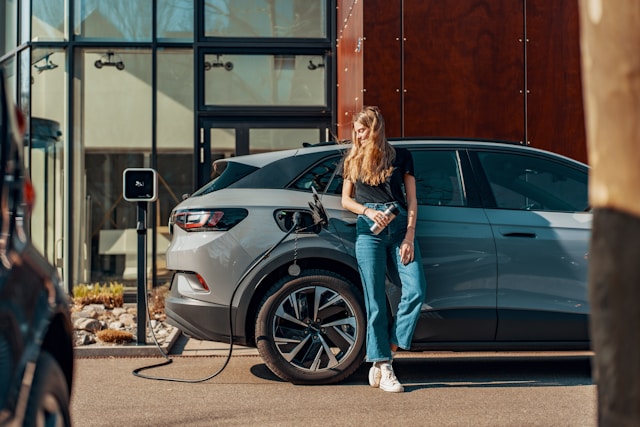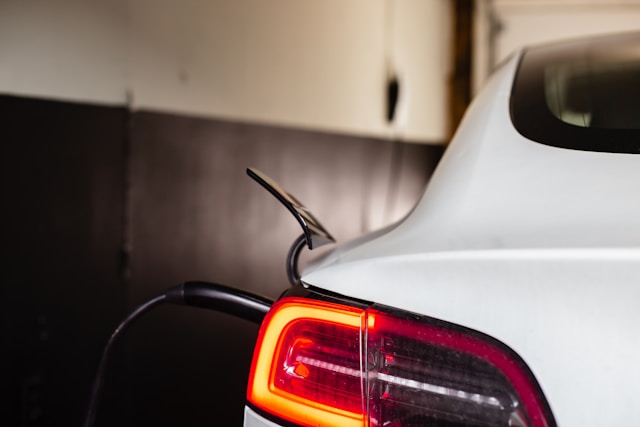
The traditional role of the electric vehicle as a mere consumer of electricity has fundamentally shifted in 2026. With the mainstream arrival of bidirectional charging, your car is no longer just a mode of transport; it is a high-capacity, mobile energy storage system. By utilizing Vehicle-to-Grid (V2G) and Vehicle-to-Home (V2H) technologies, an EV can function as a “giant home battery,” capable of powering your household for days, reducing energy bills, and providing a critical safety net during grid failures.
The Mechanics of Bidirectional Power
The secret to this transformation lies in the hardware that allows electricity to flow in two directions. While standard chargers only push power into the car, bidirectional systems—specifically the V2H and V2G variants—allow the vehicle’s battery to push power out.
This process requires a specialized bidirectional DC charger (or an AC system compatible with the car’s onboard inverter) and a “gateway” unit that manages the interface between the car, the home’s electrical panel, and the utility grid. In 2026, many new EVs—including models like the Ford F-150 Lightning, the Hyundai IONIQ series, and the VW ID. range—come from the factory with the internal circuitry needed to support these high-volume energy transfers.
Vehicle-to-Home (V2H): Energy Independence and Backup
While V2G involves the wider electrical grid, V2H is a localized solution that focuses entirely on your property. In this setup, your EV acts as a stationary battery, much like a Tesla Powerwall, but with significantly more capacity. A typical home battery might hold 10–13.5 kWh of energy, whereas a standard 2026 EV battery holds between 60 kWh and 100 kWh.
During a power outage, the V2H system automatically “isolates” your home from the grid and switches to the car’s battery. Depending on your energy consumption, a fully charged EV can power essential appliances—refrigerators, lights, internet, and HVAC—for three to five days. For homes with solar panels, the EV becomes the ultimate storage solution, capturing excess daytime solar generation and releasing it at night, effectively allowing the household to run on 100% self-generated green energy.
Vehicle-to-Grid (V2G): Profit and Grid Stability
V2G takes the concept a step further by connecting your vehicle to the national energy infrastructure. In 2026, utility companies have moved beyond pilot programs and are offering “Virtual Power Plant” (VPP) contracts to EV owners. Under these agreements, you allow the utility to “borrow” a small percentage of your battery’s energy during peak demand hours—typically in the evening when everyone is cooking and using heavy appliances.
In exchange, you are compensated through direct payments or credits on your electricity bill. The AI-driven charging software ensures the car is never depleted below a “safety threshold” that you set, so you always have enough range for your morning commute. By aggregating thousands of EVs into a single, dispatchable power resource, V2G helps stabilize the grid and reduces the need for “peaker” plants that rely on fossil fuels.
Economic Benefits and ROI
The financial case for turning an EV into a home battery has become ironclad in 2026. While a bidirectional charger is more expensive than a standard wall box—typically ranging from $2,500 to $6,000—the long-term savings are substantial.
By charging the car during “off-peak” hours when electricity is cheapest (or free via solar) and discharging it into the home during “peak” hours when rates are highest, a V2H-enabled household can save between $400 and $800 annually on energy costs. When combined with V2G revenue from utility companies, many owners are finding that the “energy premium” of the bidirectional hardware pays for itself in less than four years, making it a highly productive asset rather than a depreciating one.
Battery Health and Longevity Concerns
A common question in 2026 is whether constant discharging for home use will “wear out” the car’s expensive battery. Modern Battery Management Systems (BMS) have largely mitigated this risk. The discharge rates required to power a home (typically 3–10 kW) are significantly lower and less stressful on the battery than the high-intensity discharge required for highway driving or the rapid heat generation of DC fast charging. Studies show that when managed correctly, the impact of V2H/V2G on the overall cycle life of a lithium-ion or solid-state battery is negligible, and most manufacturers now explicitly include bidirectional use in their official battery warranties.
Conclusion: The Car as an Energy Hub
The 2026 transition to V2G and V2H technology marks the end of the “one-way” energy era. Your electric vehicle is no longer just a tool for movement; it is a vital pillar of your home’s energy resilience and a strategic participant in the global power market. By turning EVs into home batteries, we are creating a more flexible, sustainable, and democratic energy landscape where every driveway is a power plant. The future of mobility is not just about where you can go, but how much power you can bring back with you.