In 2026, corporate transparency has evolved from a voluntary “goodwill” gesture into a hard financial asset. As global markets grapple with geopolitical instability and the rapid integration of AI, the ability to provide real-time, verifiable data is the primary way businesses secure lower financing costs, win consumer trust, and maintain their license to operate. Transparency is no longer about what a company claims in an annual report; it is about the “Digital Proof” embedded in every transaction and product.
The “Glass Supply Chain” and Digital Product Passports
The most significant shift in 2026 is the end of opaque supply chains. Driven by the EU’s Ecodesign for Sustainable Products Regulation (ESPR), the Digital Product Passport (DPP) has become a mandatory requirement for textiles, furniture, and electronics sold in major markets.
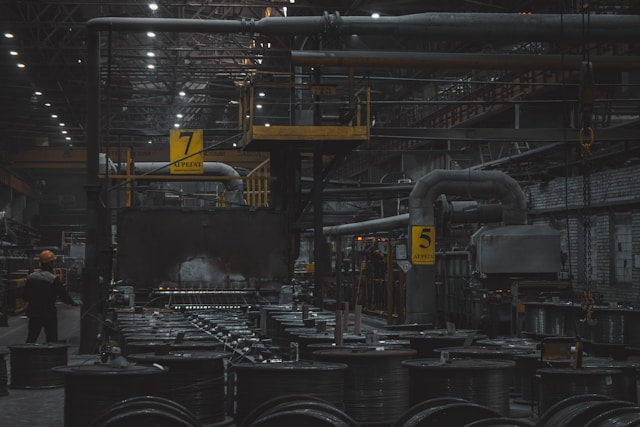
These passports provide a machine-readable “audit trail” for every item, detailing its material composition, repair history, and carbon footprint. For a 2026 business, this transparency is a competitive currency: brands that can prove their circularity through a DPP gain immediate access to eco-conscious market segments and avoid the heavy “non-compliance” penalties that now impact laggards. Transparency has moved from the marketing department to the factory floor, becoming a core requirement for product design and logistics.
Agentic AI: The Automated Auditor
The “transparency gap”—the delay between an event and its public disclosure—has been closed by Agentic AI. In 2026, corporate treasuries and CFO offices have transitioned to Autonomous Finance.
-
Real-Time Visibility: AI agents now run in the background 24/7, providing the CEO and board with a “Zero Balance” view of global liquidity and risk.
-
Automated Accountability: These systems don’t just track data; they activate actions. If a supply chain node deviates from ethical or environmental standards, the AI agent can trigger a “compliance alert” or automatically pause payments until the issue is resolved.
-
ISO 20022 and Tokenization: The full adoption of ISO 20022 standards and Distributed Ledger Technology (DLT) means that B2B payments now carry an “unprecedented richness of data.” Every dollar moved in 2026 is attached to a digital record that is traceable, programmable, and instantly auditable, making financial fraud significantly harder to hide.
Regulatory Teeth: AI and Privacy Accountability
By mid-2026, global regulations have caught up with the AI boom. Governments are now actively enforcing strict laws—such as the EU AI Act and India’s DPDPA—that mandate “Algorithmic Accountability.”
Companies are now legally required to document the logic behind their AI-driven decisions. Whether it’s an automated hiring tool or a dynamic pricing algorithm, businesses must provide “Plain-Language Disclosures” that explain how the AI arrived at its conclusion. In 2026, transparency about Data Provenance—where your AI training data came from and how it is protected—is a non-negotiable requirement for maintaining consumer trust and avoiding massive regulatory fines.
The CFO as the “Trust Architect”
The role of the CFO has been redefined in 2026. No longer just the guardian of the balance sheet, the CFO is now the Strategic Architect of Trust.
Investment decisions are increasingly tied to a firm’s Digital Reputation Score, a live metric derived from its transparency data. In the 2026 boardroom, “Value Creation” is inextricably linked to “Data Integrity.” Firms that prioritize radical transparency—offering open-source insights into their ESG metrics and AI governance—are rewarded with higher valuations and more resilient stock performance. Those that cling to the “black box” models of the past are finding that their cost of capital is rising as investors flee from the risk of the unknown.
Conclusion: The End of the Corporate Secret
In 2026, the only way to be a private company is to have public values. The decentralized media landscape and the rise of AI-driven assurance tools have made it nearly impossible for corporations to hide their externalities. Transparency has become the “New Currency” because it is the only reliable hedge against volatility. In an era of deepfakes and algorithmic noise, the truth—verifiable, real-time, and machine-readable—is the most valuable asset a business can own. The “Transparent Enterprise” is not just an ethical ideal; it is the only business model built to survive the future.