In 2026, the green investing landscape has undergone a “Great Reset.” The speculative fervor of the early 2020s has been replaced by a disciplined, execution-focused market. Investors have moved past broad “ESG” labels to demand granular data on financial materiality and real-world impact. This year is defined by the separation of Climate Tech—which is seeing record investment in scalable infrastructure—from the “greenwashing” noise that has plagued the sector for years.
The Hydrogen Reset: A Lesson in Hype vs. Reality
Green hydrogen is the definitive case study for 2026. After years of being touted as the “holy grail” of clean energy, the sector has faced a necessary correction. In 2026, the global project pipeline has contracted as investors realize that early projections lacked infrastructure clarity and bankable economics.
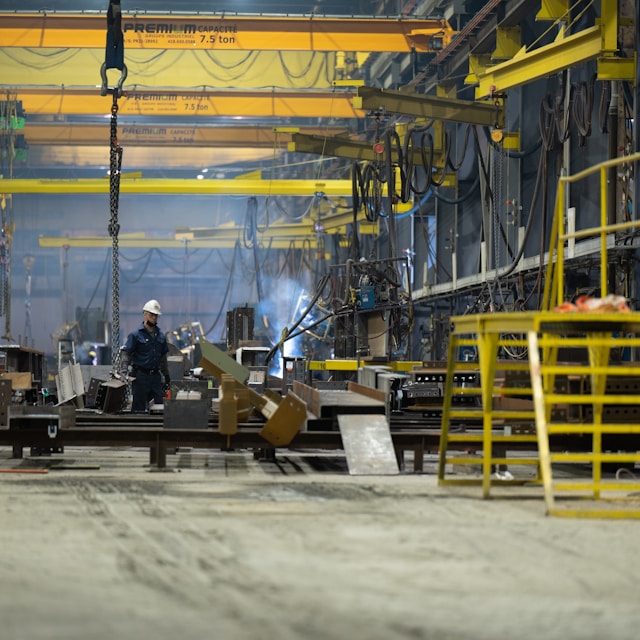
Instead of funding speculative “moonshots,” 2026 capital is flowing into Execution-Ready Hydrogen. Investors are now selectively backing projects that have “clear demand anchors”—meaning they are integrated directly into heavy industrial value chains (like green steel or chemical manufacturing) where the offtake is guaranteed. The hype has diminished, but the resulting landscape is leaner, more credible, and fundamentally more functional.
Regulatory Clarity: The End of Optional Transparency
By mid-2026, the era of “voluntary” sustainability reporting has officially ended. Global markets have adopted a “Zero-Footprint” transparency standard, making it significantly harder for firms to hide environmental liabilities.
-
SFDR & Article 9 Maturity: In Europe, the Sustainable Finance Disclosure Regulation (SFDR) has matured. Investors are no longer swayed by “Article 8” (light green) marketing; they are strictly targeting “Article 9” funds that demonstrate a direct, measurable sustainable investment objective.
-
Mandatory Disclosures: In 2026, mandatory ESG reporting has come into effect across major Asian markets, including China, India, and South Korea. This global alignment ensures that “green value” can be compared across borders with the same rigor as traditional financial P&L statements.
-
Anti-Greenwashing Enforcement: Regulators, led by the UK’s FCA and the EU, are now actively prosecuting firms for “exaggerated” environmental claims. The 2026 standard requires that any “green” claim must be factually correct, complete, and capable of ongoing substantiation.
The Performance Gap: Alpha in Sustainability
The narrative that green investing requires a “performance sacrifice” has been debunked by 2026 data. Modern performance-tracking models show that Sustainability-Leading Companies are producing positive alpha (excess returns) independent of traditional style factors.
As of early 2026, 16 out of 28 sustainable-themed cohorts have outperformed global equities. The leaders are not the broad “ESG” funds, but those focused on Thematic Value: grid efficiency, green capital expenditure (Capex), and materials supporting a circular economy. These companies are thriving because they are solving the “Energy-Transition Demand Shock” caused by the massive power requirements of AI data centers—a sector that is projected to consume 1,500 TWh by 2030.
Nature and Biodiversity: The New Asset Class
In 2026, green investing has expanded beyond carbon to include Nature and Biodiversity. Investors have recognized that more than $8 trillion in gross value added—roughly 10% of global GDP—is “highly dependent” on nature (specifically in construction, agriculture, and food).
This year, “Natural Capital” strategies have become a mainstream hedge against climate volatility. Investing in regenerative agriculture, drought-resistant ag-tech, and biodiversity restoration is no longer seen as philanthropy; it is a defensive strategy to protect supply chains from the physical risks of a changing climate.
AI-Driven Assurance: The Detector Tools
The “Hype-Detector” of 2026 is powered by AI. Investors are now utilizing high-tech assurance platforms like GreenWatch to verify corporate claims in real-time. These “Human-in-the-Loop” AI systems cross-reference public sustainability reports with satellite imagery, real-world emissions data, and lobbying activities. If a company claims “carbon neutrality” while their methane emissions are spiking via satellite detection, the AI flags the “Greenwashing Probability” instantly. This technological layer has returned power to the asset owner, ensuring that capital is allocated based on performance, not poetry.
Conclusion: The Shift Toward Execution
Green investing in 2026 is no longer about “saving the world” as an abstract ideal; it is about financing the transition as a mechanical necessity. The hype has been filtered out by higher interest rates and stricter regulations, leaving behind a robust market of high-quality, resilient assets. Investors who win in 2026 are those who look past the labels and focus on the “demand anchors” and “structural needs” of the new economy. Value is no longer found in the promise of a green future, but in the execution of a green present.