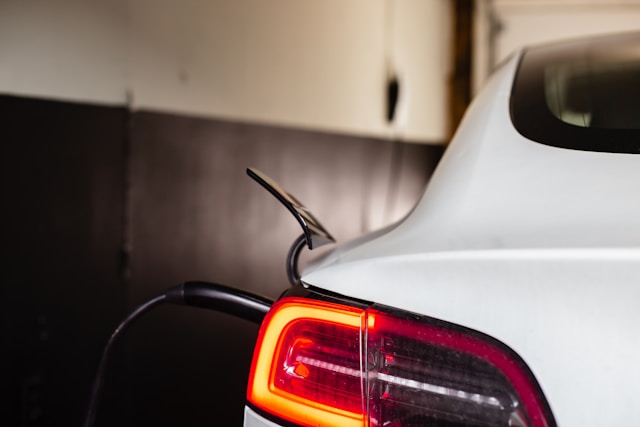
For years, the electric vehicle market was a tale of two extremes: high-end luxury sedans for early adopters or niche city cars with limited utility. However, 2026 has emerged as the definitive turning point for the “mass-market” EV. A combination of battery chemistry breakthroughs, modular manufacturing, and a surging used market has finally put electric commuting within reach of the average driver. The “budget-friendly” segment is no longer a compromise; it is the most competitive and innovative sector in the automotive industry.
The $25,000 Threshold: 2026’s Magic Number
In 2026, the psychological and financial barrier of $25,000 is finally being breached by several new-model entries. Manufacturers have moved past the expensive “prestige” phase and are now focused on volume. This has been made possible by the widespread adoption of Lithium Iron Phosphate (LFP) batteries. While slightly less energy-dense than the high-end Nickel-Manganese-Cobalt (NMC) cells found in luxury SUVs, LFP batteries are significantly cheaper to produce, safer, and boast a much longer cycle life.
For the daily commuter, this trade-off is ideal. A $25,000 electric commuter in 2026 typically offers between 300 and 400 kilometers (185–250 miles) of range—more than enough for the average daily round trip, with plenty of margin for errands. Models like the redesigned Nissan Leaf, the Chevrolet Equinox EV (base trim), and the much-anticipated sub-$25k entries from Ford and Volkswagen are leading this charge, proving that “budget” no longer means “low range.”
Modular Platforms: The Secret to Scalable Affordability
The reason these prices are falling isn’t just cheaper batteries; it’s smarter engineering. In 2026, the industry has fully embraced “Modular EV Platforms.” By using a single, scalable chassis architecture (like Volkswagen’s MEB or Renault’s CMF-B) for a dozen different models, manufacturers can spread the massive costs of research and development across millions of units.
This “Lego-block” approach to car building allows for a diversity of body styles—hatchbacks, compact crossovers, and even small pickups—all sharing the same motors, inverters, and battery mounting systems. For the consumer, this means the budget segment now offers the same build quality and safety technology as premium models, just in a more compact and efficient package.
The Used EV Boom: A New Entry Point
Perhaps the most significant factor in the rise of affordable electric commuting in 2026 is the maturity of the used car market. As the first massive wave of lease returns from the early 2020s hits the secondary market, high-quality EVs are becoming available at unprecedented prices.
Reliable workhorses from 2022 and 2023, such as the Chevrolet Bolt EUV, the Hyundai Kona Electric, and early Tesla Model 3s, are frequently found in the $15,000 to $20,000 range. With battery health tracking now a standard part of vehicle history reports, buyers can purchase a used EV with the same confidence as a gas car. This secondary market is acting as a “gateway” for millions of commuters who were previously priced out of the new EV market.
Total Cost of Ownership (TCO) vs. Sticker Price
In 2026, the “budget-friendly” label is increasingly applied to a car’s lifetime, not just its purchase price. With gasoline prices remaining volatile and maintenance costs for internal combustion engines rising as the technology is phased out, the “Total Cost of Ownership” (TCO) for a $30,000 EV is often lower than that of a $22,000 gas car over a five-year period.
Commuters are increasingly doing the math. When you factor in the 50% lower maintenance costs, the elimination of oil changes, and the significantly lower “cost per mile” of electricity, the budget EV becomes the only rational choice for a daily driver. This economic reality is driving a massive shift in consumer behavior, particularly among younger professionals and families looking to stabilize their monthly transportation budgets.
Urban Utility and Micro-EVs
The budget revolution is also seeing the rise of a new category: the “Micro-Commuter.” These ultra-compact vehicles—often categorized as neighborhood electric vehicles (NEVs)—are designed specifically for the 20-kilometer urban commute.
With starting prices often below $15,000, these vehicles offer a weather-protected, safe alternative to e-bikes and scooters. They represent a fundamental rethinking of what a “car” needs to be for a city dweller. In 2026, many two-car households are replacing their secondary gas vehicle with one of these micro-EVs, viewing them as a “tool for a task” rather than a status symbol.
Conclusion: The Democratization of the Drive
The rise of budget-friendly electric commuters in 2026 represents the democratization of sustainable mobility. We have moved past the era where saving the planet (and saving money) was a luxury reserved for the few. From the high-tech modular hatchbacks to the robust used-car market, the options for affordable electric transport have never been more diverse. As the industry continues to scale and battery prices fall toward $80 per kWh, the budget-friendly EV is set to become not just a popular choice, but the standard for the global commuter. The electric revolution is finally for everyone.