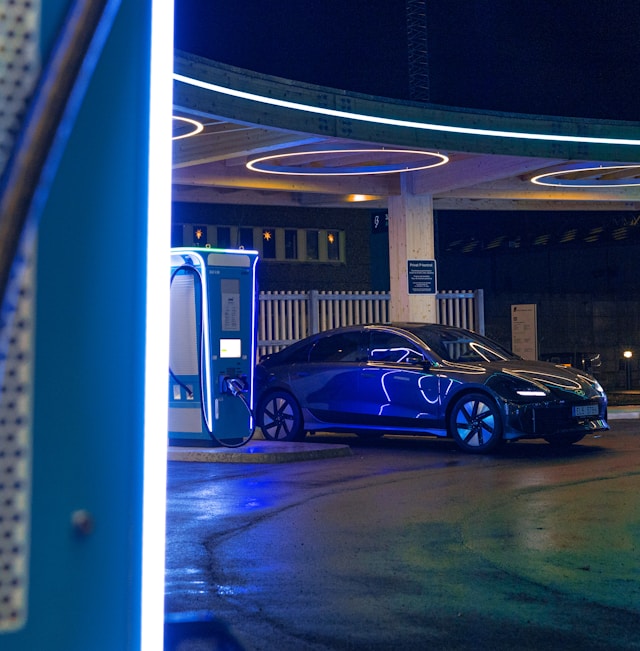
In 2026, the debate over whether electric vehicles (EVs) or internal combustion engine (ICE) vehicles are more economical has moved beyond fuel prices. For long-term owners, the true battleground is the service bay. While EVs often carry a higher initial purchase price, a comprehensive look at maintenance and repair data from the last five years reveals a dramatic divergence in total ownership costs. By eliminating the complexities of the combustion engine, EVs have fundamentally restructured the financial mathematics of car ownership.
The Complexity Gap: 2,000 Parts vs. 20
The primary driver of the maintenance cost difference is mechanical simplicity. A traditional gasoline engine is a masterpiece of complex engineering, containing over 2,000 moving parts that operate under extreme heat and friction. These systems—including pistons, valves, timing belts, and exhaust components—require a constant regimen of lubrication and replacement to prevent catastrophic failure.
In contrast, an electric drivetrain is remarkably streamlined, typically containing fewer than 20 moving parts. By 2026, data shows that this reduction in complexity translates to a 40% to 50% decrease in scheduled maintenance costs. EV owners completely bypass the “checklist of chores” that define gas car ownership, such as oil changes, spark plug replacements, air filter swaps, and transmission fluid flushes. Over a ten-year period, these avoided services represent thousands of dollars in direct savings.
Brake Longevity: The Regenerative Advantage
One of the most surprising findings in long-term cost studies is the lifespan of braking systems. In a gas-powered vehicle, friction brakes are the sole method of deceleration, leading to pad and rotor replacements every 30,000 to 50,000 miles.
EVs utilize regenerative braking, a system where the electric motor reverses its function to slow the vehicle, capturing energy to recharge the battery. This process handles the vast majority of everyday braking needs, significantly reducing the mechanical wear on physical brake pads. Recent 2026 reports indicate that EV brake pads can often last over 100,000 miles, effectively doubling or tripling the service interval compared to ICE vehicles and further widening the long-term cost gap.
The Tire Factor: The Only “EV Premium”
It is important to note that EVs are not cheaper in every category. Due to the significant weight of battery packs and the high instantaneous torque delivered to the wheels, EVs tend to wear through tires approximately 20% faster than comparable gas vehicles.
In 2026, however, this “tire tax” is being mitigated by the arrival of EV-specific tire compounds designed for higher load ratings and lower rolling resistance. While the cost per mile for tires remains slightly higher for EVs, it is a minor expense when viewed against the massive savings in engine and drivetrain repairs. For most owners, the extra cost of a set of tires every few years is a small price to pay for the elimination of bi-annual oil changes and mechanical breakdowns.
Battery Health and Warranty Protection
The “elephant in the room” for EV maintenance has always been the potential cost of battery replacement. In the early 2020s, this was a major concern for used car buyers. By 2026, the data has largely put these fears to rest. Modern lithium-ion and semi-solid batteries are proving to be exceptionally durable, with average degradation rates of less than 2% per year.
Furthermore, nearly all manufacturers in 2026 provide 8-to-10-year or 150,000-mile warranties on battery packs. For the first decade of a vehicle’s life, the most expensive component is essentially “de-risked” for the owner. When compared to the likelihood of a major ICE failure—such as a blown head gasket, transmission failure, or turbocharger replacement—the EV remains the statistically safer financial bet.
Lifetime Savings: The 15-Year Horizon
When examining the 15-year total cost of ownership, the results are definitive. A 2026 study comparing equivalent mid-sized models found that an EV saves an average of $15,000 over its lifetime compared to a gas vehicle. This calculation includes not only the 50% lower maintenance costs but also the significant delta in fueling expenses.
While a gas vehicle becomes more expensive to maintain as it ages—with “major” services hitting at the 60,000 and 100,000-mile marks—the maintenance curve for an EV remains relatively flat. The primary long-term costs for an EV owner are limited to cabin air filters, tire rotations, and occasional coolant flushes, ensuring that the vehicle stays as affordable in year ten as it was in year one.
Conclusion: The Rational Economic Choice
As we reach the middle of the decade, the financial case for electric mobility has become ironclad. The “Long-Term Cost Study” proves that while gas cars may offer a lower barrier to entry, they act as a continuous drain on resources through a relentless cycle of mechanical upkeep. For the modern consumer, the EV is not just an environmental statement; it is a rational economic choice that provides a simpler, more predictable, and significantly cheaper path to long-term mobility. The era of the “unreliable” high-mileage car is ending, replaced by a generation of electric vehicles that are built to last with minimal human intervention.